What Is the Spectrum of Autism? A Practical Guide to Traits and Support Levels
When people ask what is the spectrum of autism, they are often trying to understand why autistic people can seem so different from one another. One person may speak fluently but struggle with unpredictable social rules. Another may communicate with few words, need daily support, and notice sensory details intensely. The spectrum is not a single line from "mild" to "severe." It is a way to describe varied patterns of social communication, sensory processing, routine, interests, movement, learning, and support needs. If you are sorting through your own observations, an autism trait screening tool can help organize reflection before you decide whether to seek a professional assessment.
What the Autism Spectrum Means
Autism spectrum disorder, often shortened to ASD, is a neurodevelopmental condition involving differences in social communication and restricted or repetitive patterns of behavior, interests, or sensory experience. Those words can sound clinical, but in everyday life they may show up as needing clear expectations, taking language literally, finding small talk tiring, repeating movements to regulate emotion, or becoming deeply focused on a specific subject.
The word "spectrum" matters because autism does not appear in one standard profile. A child who avoids eye contact, speaks late, and lines up toys may be autistic. So may an adult who talks easily at work but comes home exhausted from masking, needs predictable routines, and feels overwhelmed by sound or light. Some autistic people also have intellectual disability or language disability. Others do not. Some need extensive support every day, while others live independently and still need specific accommodations.
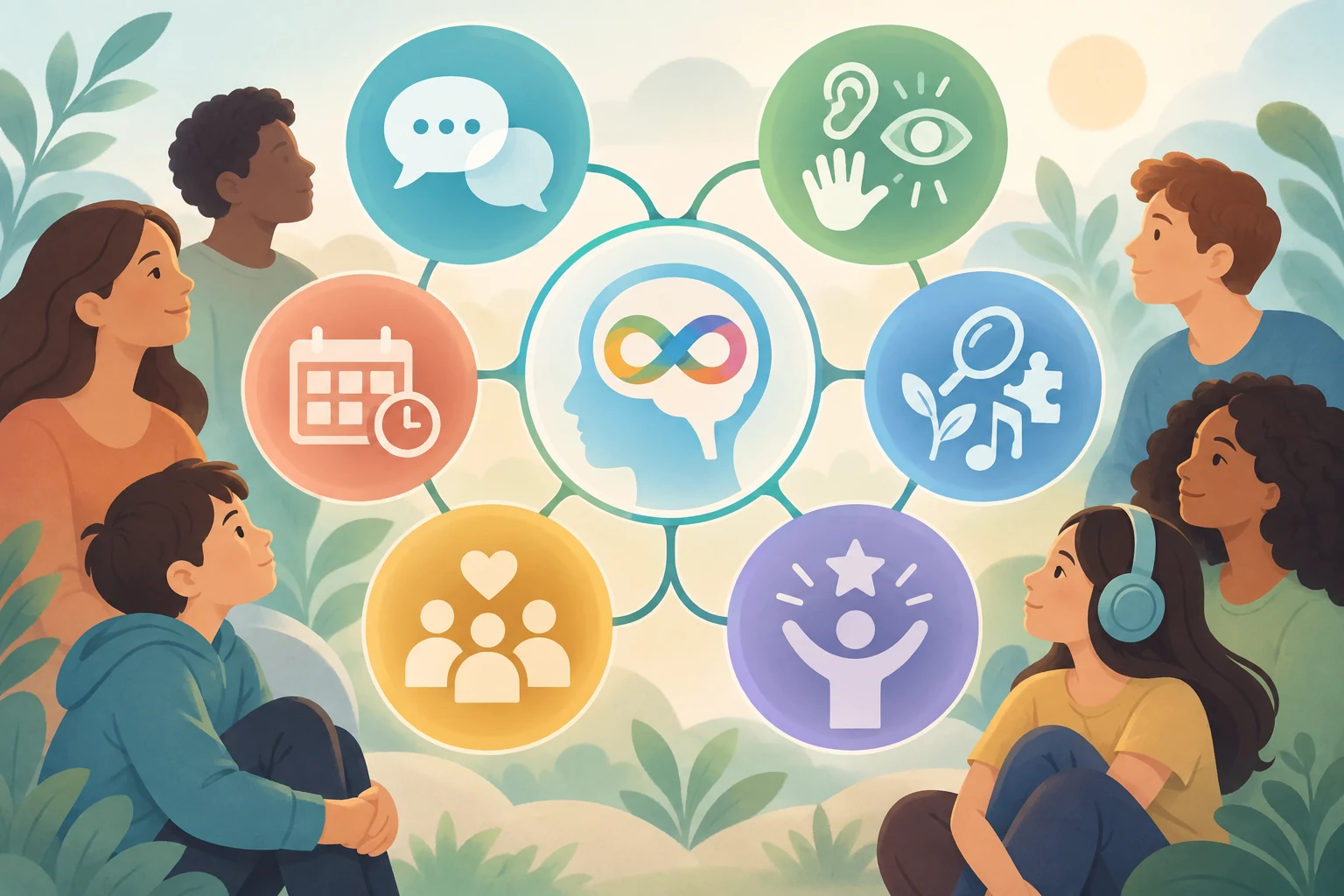
The most useful way to think about the spectrum is as a profile, not a ranking. Imagine a dashboard with several sliders: social energy, spoken language, sensory sensitivity, flexibility with change, focused interests, motor patterns, and daily support. Every autistic person has a different setting on each slider, and those settings can change with stress, environment, age, health, sleep, or support.
Why "High-Functioning" and "Low-Functioning" Can Mislead
Searchers often ask about symptoms of high-functioning autism because they want language for people who appear independent, verbal, or academically capable. The phrase is common, but it can hide real needs. A person may do well in school, maintain a job, or speak fluently while still struggling with sensory overload, burnout, social confusion, executive functioning, or transitions.
"Low-functioning" can be equally limiting. It may reduce a person to visible support needs and overlook intelligence, preferences, communication, humor, memory, or strengths. A non-speaking autistic person may understand far more than others assume. A person who needs daily care may still have a rich inner life and specific ways to participate.
Support needs are more respectful and practical than functioning labels. Instead of asking whether someone is high- or low-functioning, ask what helps them communicate, regulate, learn, work, rest, and make choices. That shift turns the spectrum from a label into a support map.
The Main Autism Trait Areas
Many explanations of autism focus on "three main symptoms," but modern descriptions usually group traits into broader areas. The first is social communication. This may include differences in back-and-forth conversation, facial expression, eye contact, gesture use, tone of voice, or understanding unwritten social rules. It does not mean autistic people lack empathy. It means communication can work differently.
The second area is restricted or repetitive patterns. These may include repeating words or movements, preferring sameness, needing routines, becoming distressed by unexpected change, or developing intense interests. Repetition can be comforting, expressive, or practical rather than meaningless.
The third area people often notice is sensory processing. Some autistic people are highly sensitive to sound, light, smell, texture, pain, or crowding. Others seek more intense input, such as pressure, movement, or repetitive sound. Sensory differences can shape clothing choices, food preferences, sleep, school participation, work comfort, and social energy.
These areas overlap. A noisy room can make conversation harder. A sudden schedule change can increase repetitive movement. A special interest can become a bridge to friendship, learning, or work. This is why a spectrum lens is more helpful than a checklist alone.

Autism Spectrum Levels: Level 1, Level 2, and Level 3
The autism spectrum levels used in clinical language describe how much support a person may need, especially for social communication and restricted or repetitive behaviors. They are not a complete description of a person, and they are not a score of worth, intelligence, or potential.
Level 1 is often described as requiring support. A person at this level may speak in full sentences and handle many daily tasks, yet still have difficulty starting social interactions, shifting between activities, coping with change, or reading social context. Adults at Level 1 may mask for years and then experience exhaustion, anxiety, or confusion about why ordinary environments feel so costly.
Level 2 is described as requiring substantial support. A person may have more obvious differences in verbal or nonverbal communication, more difficulty adapting to change, and repetitive behaviors or sensory needs that interfere with daily routines. In adults, Level 2 characteristics can include needing regular help with planning, transitions, employment supports, communication repair, or sensory regulation.
Level 3 is described as requiring very substantial support. A person may have major communication differences, strong distress with change, and daily support needs that are visible across settings. Support may involve communication systems, caregiver assistance, environmental adaptation, and coordinated professional services.
The levels can guide planning, but they do not capture everything. Someone's support needs may be higher in a loud workplace than at home, higher during illness than during a calm week, or different for communication than for daily living. For self-reflection, tools such as AQ-based self-reflection can help you notice patterns, while a formal assessment considers history, observation, development, and context.
What Causes Autism?
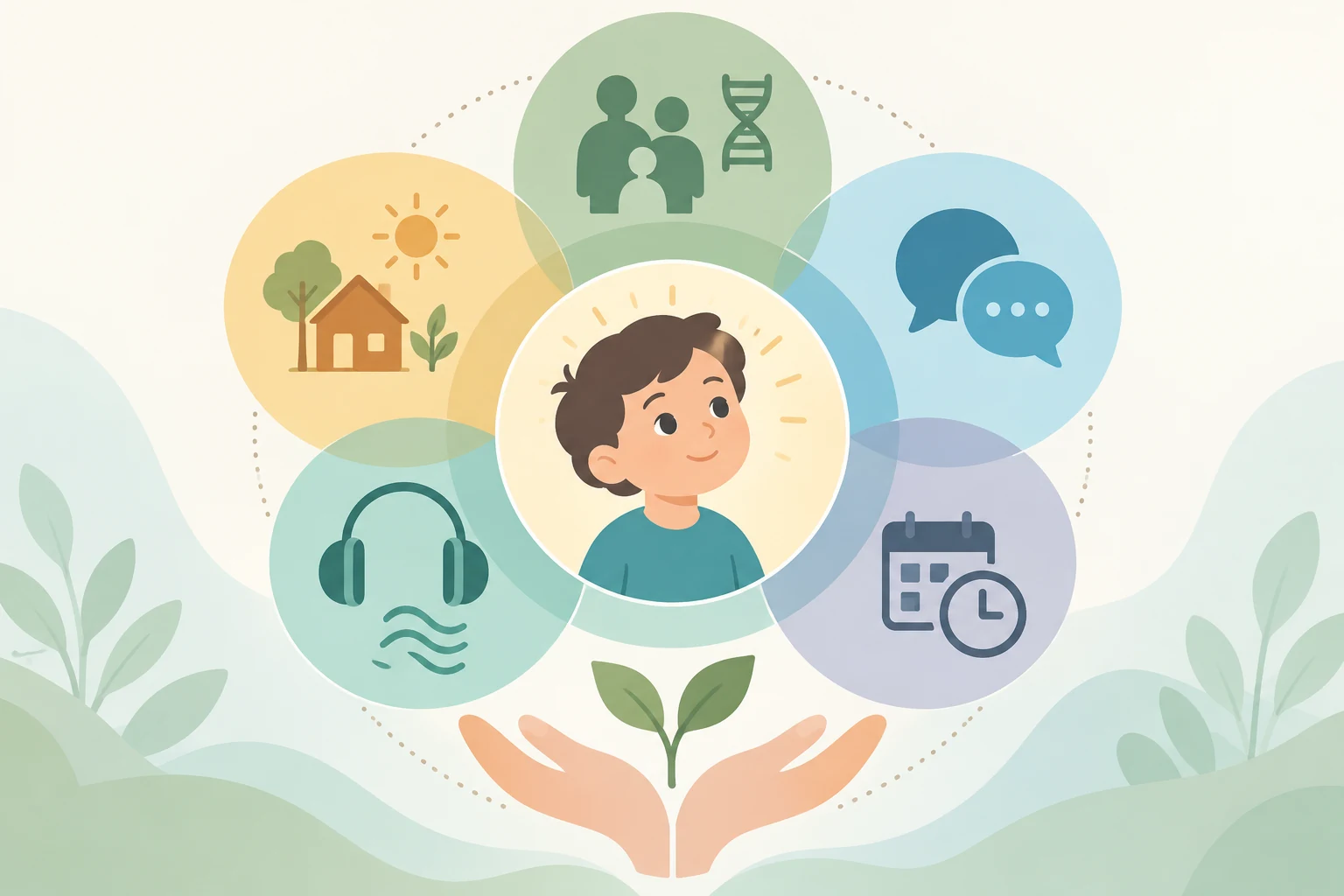
Autism is not caused by one simple factor. Research points to a complex mix of genetic influences and developmental factors. Families often ask whether autism is genetic, and genetics do play an important role, but there is no single autism gene that explains every case.
Environmental factors can also affect developmental risk, but that does not mean everyday parenting choices cause autism. Autism is not caused by poor parenting, personality weakness, or lack of effort. It is also not an illness that someone catches. It reflects differences in brain development and functioning.
When discussing causes, it is important to avoid blame. A cause-focused search can be useful when families want accurate information, but support-focused questions are often more actionable: What helps this person communicate? What environments reduce overload? What accommodations make school or work more accessible? What strengths can be protected while challenges are supported?
Early Signs in Boys, Girls, and Adults
Early signs of autism can include delayed speech, limited response to name, reduced shared attention, repetitive play, unusual sensory reactions, strong preference for sameness, or intense distress during transitions. In boys, signs may be noticed earlier when repetitive behaviors, language delay, or obvious social differences stand out. Still, boys are not all alike, and no single sign proves autism on its own.
Girls and women may be missed when their traits are less stereotypical or more masked. They may copy social behavior, force eye contact, rehearse conversation, or develop interests that seem typical on the surface but are unusually intense in depth. Many adults, across genders, begin asking about autism after years of feeling different, drained by social performance, or confused by sensory and routine needs.
Adults may notice patterns such as difficulty with vague instructions, exhaustion after social events, strong discomfort with unexpected change, intense focus, sensory sensitivity, stimming, or a history of being called too blunt, too sensitive, or too rigid. These observations can be meaningful, but they are still starting points. Anxiety, ADHD, trauma, learning differences, and other factors can overlap with autism traits.

How to Think About Autism Spectrum Disorder Treatment and Support
Support for autistic people is most helpful when it is individualized. The goal is not to erase autistic identity. The goal is to reduce barriers, build communication access, improve quality of life, and support participation in ways that respect the person.
For children, support may include speech and language therapy, occupational therapy, parent coaching, educational accommodations, visual schedules, sensory-friendly environments, and communication systems. For adults, support may include workplace accommodations, therapy for anxiety or burnout, coaching for executive functioning, sensory planning, peer community, or practical changes to routines and environments.
Medication may be used for some co-occurring concerns, such as anxiety, sleep difficulties, or attention challenges, but medication does not make autism disappear. Good support is flexible and reviewed over time because a person's needs can change.
One simple action component is to write a context log for two weeks. Track what happens before overload, shutdown, conflict, or exhaustion. Note sound, light, change, social demand, hunger, sleep, uncertainty, and recovery time. Patterns often become easier to see when they are written down.
Another useful step is to list supports by setting. Home might need quiet recovery time. School might need written instructions. Work might need predictable meeting agendas. Healthcare visits might need extra processing time. A spectrum profile becomes practical when it points to specific supports.

Turning Spectrum Insight Into Next Steps
So, what is the spectrum of autism in practical terms? It is a way to understand that autism involves different combinations of traits, strengths, barriers, and support needs rather than one fixed appearance. It helps explain why one autistic person may need communication technology, another may need sensory accommodations, and another may mainly need people to stop mistaking masking for ease.
If you are reflecting on yourself or someone you care for, keep the question grounded: Which patterns are consistent, which settings make them easier or harder, and what support would improve daily life? You can explore autistic traits with a structured screener as one educational step, then bring your notes to a qualified professional if you want a fuller assessment. A good next step should create clarity, not pressure.
FAQ
What are the symptoms of high-functioning autism?
People using this phrase often mean autistic people who speak fluently or appear independent. Common traits may include social fatigue, difficulty with unwritten social rules, sensory sensitivity, strong routines, intense interests, stimming, literal communication, or burnout from masking. The phrase can miss hidden support needs, so "lower visible support needs" or "Level 1 support needs" may be more accurate in some contexts.
What are the autism spectrum levels?
Autism spectrum levels describe support needs. Level 1 means requiring support, Level 2 means requiring substantial support, and Level 3 means requiring very substantial support. These levels can help with planning, but they do not summarize a whole person. Support needs can vary across communication, sensory environments, daily living, stress, and life stage.
What are the characteristics of Level 2 autism in adults?
An adult with Level 2 autism may need regular, structured support for communication, transitions, planning, sensory regulation, or daily routines. Social differences and repetitive behaviors may be more visible than in Level 1, and changes may be harder to manage without preparation. Strengths, preferences, and communication style still vary widely from person to person.
What are the early signs of autism in boys?
Early signs in boys may include speech delay, limited response to name, repetitive movements, lining up objects, intense interests, reduced shared play, distress with changes, or unusual reactions to sound, texture, food, or clothing. These signs should be discussed with a pediatrician or qualified developmental professional, especially when they are persistent or affect daily life.
Is autism the same as Asperger's syndrome?
Asperger's syndrome was once used as a separate label, especially for autistic people without early language delay or intellectual disability. In many current clinical systems, it falls under autism spectrum disorder. Some people still identify with the Asperger's term because it is part of their history, while others prefer autistic or autism spectrum language.
Is autism a disability?
Autism can be considered a disability because autistic people may face barriers in communication, sensory environments, education, work, healthcare, or daily living. Many also view autism through a neurodiversity lens, meaning it is part of natural human variation. Both ideas can be true: autism can involve strengths and identity while also requiring real support and accommodations.
Can an online autism test tell me if I am autistic?
An online test can support reflection by organizing trait patterns, but it cannot replace a professional assessment. Results can be affected by masking, anxiety, ADHD, culture, language, age, and how someone interprets questions. Use online screening as a starting point for notes, conversations, and next steps rather than as a final answer.