Understanding Your Autistic Test Results: Self-Discovery vs. Professional Assessment
For many adults who suspect they might be on the autism spectrum, seeing a high score on an online test brings both relief and uncertainty. The results can validate lifelong feelings of being different. At the same time, new questions arise: "Is this enough?" or "What comes next?"
This journey of self-discovery is a powerful first step. Understanding your own traits is incredibly valuable. But it can be confusing to know whether to pursue a professional assessment. This article will help you explore both paths, so you can move forward with confidence. We will look at the value of self-discovery, the benefits of a formal diagnosis, and how to bridge the gap between them.
Whether you are just starting to question your experiences or are looking for your next step, this guide is for you. A great place to begin is by gathering personal insights. An online autistic test can provide a structured way to explore your traits and start your journey.
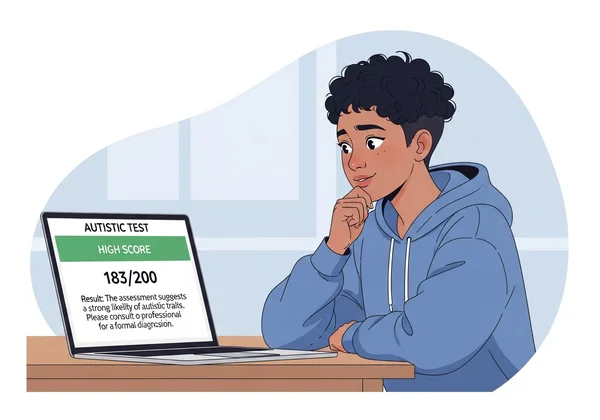
Understanding Autistic Test Results: The Value of Self-Discovery
Many people are discovering their autistic traits as adults. This is not just a trend; it is a shift in understanding. For a long time, autism was mainly diagnosed in young boys, leaving many others without answers. Now, as awareness grows, more adults are finding explanations for experiences they have had their whole lives. Self-discovery is a valid and empowering part of this process.
Why Many Adults Are Discovering Their Autism Later in Life
The criteria for diagnosing autism have changed over time. Previously, the focus was on specific childhood behaviors that did not always apply to girls, women, or adults who learned to adapt. This led to many people being missed by the healthcare system.
Another key reason for late discovery is "masking." Masking is when an individual consciously or unconsciously hides their autistic traits to fit in with social expectations. They might force eye contact, imitate the social behaviors of others, or suppress repetitive movements (stimming). While masking can help navigate a neurotypical world, it is mentally and emotionally exhausting. It also makes it much harder for others—and even for the person themselves—to recognize their autistic traits.
The Validity of Personal Insight in the Autism Journey
Your personal experience is a vital source of information. You are the expert on your own life, feelings, and challenges. Research has shown that self-reported information can be highly accurate in identifying autistic traits. Your deep awareness of your own internal patterns provides a rich context that a short clinical observation might miss.
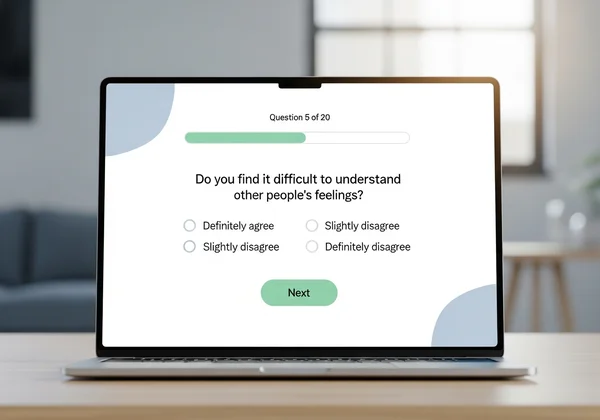
This self-knowledge is not just for personal validation. It is also clinically valuable. If you decide to seek a professional assessment, your detailed understanding of your own history, social patterns, and sensory experiences will be crucial information for the clinician. Starting this journey with a structured tool can help organize your thoughts and provide a clearer picture. A free autistic test online can be an excellent first step in this process.
Clinical Assessment: When and Why It May Be Beneficial
While self-discovery is a powerful tool, a professional clinical assessment offers a different kind of clarity. It is the formal process of getting a medical diagnosis from a qualified professional, like a psychologist or psychiatrist. This step isn't necessary for everyone, but for some, it provides access to support and accommodations that are otherwise unavailable. Understanding what this process involves can help you decide if it's the right path for you.
What Happens During a Professional Autism Evaluation?
A formal evaluation for adults is more than just a questionnaire. It is a comprehensive process designed to get a full picture of who you are. It typically involves several parts, including detailed interviews about your developmental history, social communication style, and repetitive behaviors or interests. The clinician will likely ask about your experiences from childhood to the present day.
The assessment may also include standardized tools, observations of your interactions, and sometimes interviews with family members who know you well. The goal is to gather information from multiple sources to make an accurate determination. The process can take several hours, often spread across multiple appointments. It is designed to be thorough and respectful of your experiences.

Benefits and Limitations of Formal Diagnosis
A formal diagnosis can open doors to practical support. It may grant you access to workplace accommodations, such as a quieter office space or flexible hours. It can also qualify you for disability services, therapeutic support, and a better understanding from medical providers. For many, having a formal diagnosis provides a final, definitive answer that ends years of uncertainty.
However, there are also limitations. Professional assessments can be very expensive and may not be covered by insurance. Waitlists can be long, sometimes lasting months or even years. Furthermore, some people worry about potential stigma or discrimination after receiving a diagnosis. It's important to weigh these benefits and drawbacks based on your personal circumstances and what you hope to achieve.
Bridging Self-Discovery and Professional Assessment
Whether you decide to pursue a formal diagnosis or not, your journey of self-understanding doesn't have to stop. The insights you gain from self-discovery are valuable on their own. You can use this knowledge to build a more supportive life, advocate for your needs, and connect with others who share your experiences. The paths of self-discovery and professional assessment are not mutually exclusive; they can work together.
Documenting Your Traits for Potential Professional Evaluation
If you are considering a professional evaluation, keeping a journal of your traits and experiences can be incredibly helpful. This creates a detailed record that you can share with a clinician. It also helps you better understand your own patterns.
Consider documenting the following:
- Sensory Sensitivities: Note any strong reactions to sounds, lights, textures, or smells. When do they happen and how do you react?
- Social Patterns: Write down situations where you felt socially awkward, misunderstood, or exhausted. What specific parts of the interaction were difficult?
- Repetitive Behaviors (Stimming): Do you have any repetitive movements or habits, like tapping, pacing, or fidgeting? Note when you do them and how they make you feel.
- Special Interests: Describe your deep interests. How much time do you spend on them, and how do they make you feel?
This log will not only prepare you for an assessment but will also deepen your own self-awareness. It's a practical step you can take right now, and a preliminary autism quiz can give you a great framework to start from.

Building Your Support Network Regardless of Diagnosis Path
Finding a community is one of the most powerful steps you can take. Connecting with other autistic adults can reduce feelings of isolation and provide a space where you don't have to "mask." You can share experiences, exchange coping strategies, and feel understood.
Look for online communities on platforms like Reddit or Facebook, or search for local neurodivergent meet-up groups. It is also important to identify allies in your personal life—friends, family members, or colleagues who are willing to learn and support you. You don't need a formal diagnosis to build a support system or to start advocating for a life that better fits your needs.
Moving Forward With Confidence on Your Autism Path
Your path to understanding your autistic traits is personal and unfolds at your own pace. For some, the personal validation from self-discovery is enough to build a happier, more authentic life. For others, a professional assessment provides the key to necessary accommodations and a final sense of closure. Both paths are valid, and they can complement each other.
What matters most is that you're taking steps to understand yourself better, no matter which path you choose. Whether you use that knowledge to seek a formal diagnosis, find a community, or simply make small changes in your daily life, you are moving forward. The relief and clarity from finally understanding why you are the way you are is profound.
Ready to take the first step on your journey of self-discovery? Your exploration can begin right now. Start your test on our platform to gain valuable insights into your unique traits. It is a free, confidential starting point for your path forward.
Common Questions About Autism Self-Discovery and Assessment
Can I trust an online autism test for self-diagnosis?
Online autism tests, especially those based on established screeners like the Autism Spectrum Quotient (AQ) test, are screening tools, not diagnostic instruments. They can accurately indicate whether you have a significant number of autistic traits. However, they cannot provide a formal medical diagnosis. Think of it as a reliable first step that helps you decide if further exploration or a professional assessment is right for you.
What if I can't afford a professional autism assessment?
The cost of a formal assessment is a major barrier for many adults. If you cannot afford one, you are not out of options. Some university psychology or medical clinics offer low-cost assessments conducted by supervised graduate students. You can also look for therapists who work on a sliding scale. Most importantly, remember that self-knowledge has immense value on its own. You can still use your understanding to build a better life and find community, even without a formal diagnosis.
How do I explain my self-discovery to family or employers?
Sharing your journey is a personal decision. When explaining it to others, it can be helpful to focus on specific traits and needs rather than just the label. For example, instead of saying "I'm autistic," you could say, "I've learned that I work best in quiet environments because I'm sensitive to noise." Sharing resources from trusted neurodiversity advocates can also help educate them. Be prepared for a range of reactions, and remember that you don't owe anyone an explanation you're not comfortable giving. Your journey is about you, and tools like an autistic traits test can help you articulate your experiences more clearly.