Signs of Autism in a 2-Year-Old: Parent Guide
Looking for signs of autism in a 2 year old usually begins with a quiet worry: your toddler is growing, but something about communication, play, sleep, sensory reactions, or social connection feels different. At age 2, differences can be easier to notice than in infancy, yet they can still overlap with normal toddler variation, speech delay, hearing issues, anxiety, temperament, or other developmental needs. This guide explains common patterns parents can watch for, how signs may look in boys and girls, and what to record before speaking with a pediatrician. For broader parent education, you can also review an autism trait screening overview as a non-clinical reflection tool.
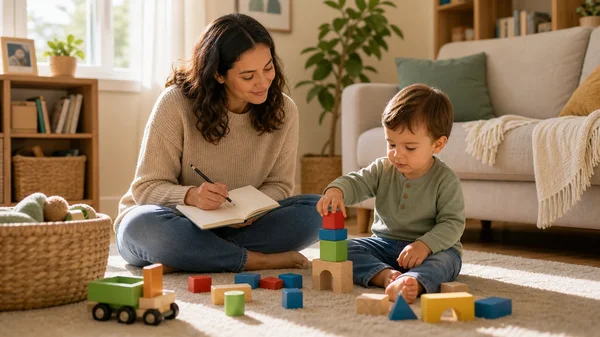
What Autism Signs Can Look Like at Age 2
Autism signs in a 2-year-old are not usually one isolated behavior. A toddler may line up toys, dislike loud sounds, or speak later than expected for many reasons. Concern grows when several patterns appear together across social communication, play, flexibility, sensory reactions, and daily routines.
By 24 months, many toddlers use words or short phrases to ask, protest, greet, share interest, and bring adults into play. A child who is autistic may communicate differently. Some use few spoken words. Some repeat phrases from videos or adults. Some pull a parent by the hand rather than pointing or looking back to share attention. Others speak clearly about preferred topics but rarely use language for back-and-forth social exchange.
At the same time, autistic toddlers can show warmth, attachment, joy, curiosity, and problem-solving strengths. The goal is not to reduce your child to a checklist. The goal is to notice patterns early enough to ask better questions and seek support if your concerns persist.
Communication Red Flags in a 2-Year-Old
Communication is often the first area parents notice. Red flags may include:
- Very few words or no flexible two-word phrases by age 2
- Limited use of gestures such as pointing, showing, waving, or reaching to share interest
- Not responding to their name consistently, especially when hearing has already been checked
- Repeating words, songs, or video lines without using them to communicate a need
- Pulling an adult toward something instead of pointing, looking, or vocalizing
- Seeming unaware when a parent tries to start a simple back-and-forth exchange
One helpful distinction is whether your toddler uses communication to share attention. For example, a 2-year-old may point to a truck, look at you, and look back at the truck as if to say, "Do you see that?" If that kind of joint attention is rare, it is worth documenting.
Some toddlers have strong receptive language and weak spoken language. Others can label letters, shapes, numbers, or objects but struggle to ask for help, answer simple social questions, or use language with another person. These mixed profiles are one reason a professional evaluation looks at more than word count.

Social Play, Eye Contact, and Shared Attention
Eye contact alone is not a reliable measure. Some autistic toddlers make eye contact with familiar people, especially during songs, movement games, or routines they enjoy. Others look briefly but do not use gaze to coordinate social attention.
More useful questions include:
- Does your toddler bring objects to show you, not only to get help?
- Do they notice when you point across the room?
- Do they imitate simple actions, sounds, or pretend-play ideas?
- Do they enjoy turn-taking games such as rolling a ball back and forth?
- Do they react when another child is upset, excited, or inviting them to play?
Signs of autism in a 2-year-old boy and signs of autism in a 2 year old girl can overlap, but girls may be easier to miss when they copy siblings, stay near adults, or show quieter repetitive play. A girl might line up toy animals in a precise order, replay the same social scene, or appear socially interested but become overwhelmed when play becomes unpredictable. A boy might be noticed sooner if his movements, speech delay, or intense interests are more visible. These are tendencies, not rules.
Repetitive Behaviors, Routines, and Sensory Patterns
Restricted or repetitive behaviors are another core area to observe. In a 2-year-old, they may look like:
- Lining up toys or sorting objects in the same order every time
- Spinning wheels, opening and closing doors, or focusing on parts of objects
- Repeating body movements such as hand flapping, rocking, jumping, pacing, or spinning
- Strong distress when routes, routines, clothing, food, or transitions change
- Intense interest in letters, numbers, vehicles, appliances, or a specific object type
- Unusual reactions to sound, texture, smell, light, movement, or touch
These behaviors are not automatically negative. Repetition can be soothing, joyful, or a way to learn. The concern is stronger when the pattern limits flexible play, causes frequent distress, or appears alongside communication and social differences.
Parents searching for signs of mild autism in a 2 year old often describe a child who is affectionate, clever, and active, but harder to engage in shared play. They may speak some words, know many labels, or solve puzzles early, while still struggling with pointing, turn-taking, pretend play, transitions, or sensory overload. "Mild" can be misleading because support needs may change by setting, fatigue, language demands, and sensory load.
Sleep, Eating, and Daily-Life Clues
Signs of autism in 2 year old sleep patterns are not specific enough to stand alone. Many toddlers wake often, resist bedtime, or go through sleep regressions. Still, sleep can be part of the bigger picture when it appears with sensory sensitivity, rigid routines, communication delays, or intense distress around change.
Daily-life patterns to track include:
- Bedtime routines that must happen in an exact order
- Strong reactions to pajamas, blankets, light, noise, or room temperature
- Very limited foods because of texture, color, smell, or brand
- Meltdowns around transitions that seem bigger than typical frustration
- Seeking intense movement, deep pressure, spinning, or crashing
- Avoiding haircuts, toothbrushing, bathing, tags, socks, or certain sounds
This is where a written log helps. Instead of writing "bedtime is impossible," note what happened before, during, and after. Did your child panic at a sound? Did the problem begin when the routine changed? Did deep pressure, a visual cue, or extra transition time help? Practical details make pediatric conversations more useful.
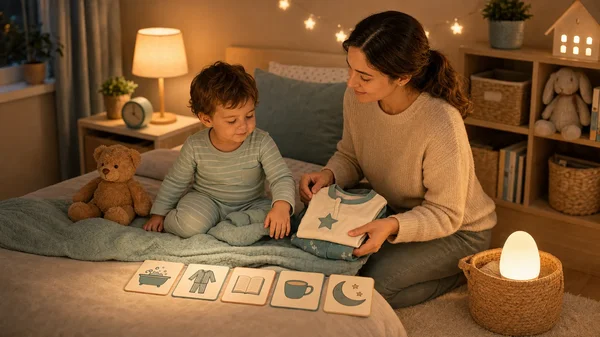
A Parent Observation Checklist for the Next Two Weeks
Before a visit, use a simple observation checklist. It can help you move from vague worry to specific examples. You are not trying to score your toddler. You are collecting patterns.
| Area | What to Watch | Example Note |
|---|---|---|
| Name response | Turns, pauses, or looks when called | Responds to snack words but not name |
| Gestures | Points, waves, shows, reaches | Takes my hand to objects, rarely points |
| Shared attention | Looks between parent and object | Smiles at toy but does not check my face |
| Play | Pretend, imitation, turn-taking | Lines up cars, upset if moved |
| Language | Flexible words, phrases, requests | Labels animals but rarely asks for help |
| Sensory | Sound, texture, light, movement | Covers ears for blender and hand dryer |
| Routines | Transitions, changes, order | Same cup required at bedtime |
Try to record frequency, context, and recovery. A behavior that happens once after a skipped nap means something different from a pattern that appears daily across settings. If daycare, grandparents, or another caregiver notices similar patterns, include those observations too.
If you want a broader framework for how trait patterns are organized, an autistic traits reflection tool can give parents language for thinking about communication, flexibility, attention, and sensory patterns. For a 2-year-old, though, parent observation and pediatric guidance matter more than any online result.

When to Talk With a Pediatrician
Talk with your child's pediatrician whenever you have persistent concerns, even if relatives say, "Wait and see." Pediatric professionals can check hearing, review milestones, use validated toddler screening tools, and refer for speech-language, developmental, occupational therapy, early intervention, or a formal autism evaluation when appropriate.
Do not wait for every sign to appear. Many autistic toddlers do not show every commonly listed behavior. Some make eye contact. Some are cuddly. Some speak early in certain areas. Some have uneven skills: advanced memory, strong visual learning, or deep interest in patterns alongside difficulty with flexible social communication.
More urgent reasons to seek guidance include loss of words or social skills, very limited response to sound or name, no meaningful two-word phrases by 24 months, frequent self-injury, major feeding restriction, or developmental concerns across several areas. These signs do not prove autism, but they do deserve timely attention.
How to Use These Signs Without Jumping to Labels
It is understandable to search for signs of autism in a 2 year old quiz when you want fast clarity. A quiz or checklist can organize concerns, but it cannot replace a clinician who observes your child, reviews history, considers hearing and language development, and looks at the whole developmental profile.
A calmer next step is to gather examples and ask: What is my child trying to communicate? What settings make things harder? What supports help? What has changed over time? This approach keeps the focus on understanding and support rather than fear.
For parents who want more language before a pediatric appointment, the autism screening education hub can be used as a gentle starting point for reflection. Bring your notes to a pediatrician, ask about developmental screening, and request referral options if concerns continue. Early support can help communication, regulation, play, and family routines, even while the full picture is still being evaluated.
FAQ
What does mild autism look like in a 2-year-old?
It may look like a toddler who is warm, curious, and skilled in some areas but has repeated difficulty with shared attention, flexible play, gestures, transitions, sensory comfort, or social communication. The word "mild" can hide real support needs, so it is better to describe the exact patterns you see.
What are red flags for autism in a 2-year-old?
Red flags include few flexible words or two-word phrases, limited pointing or showing, inconsistent response to name, little pretend play, repetitive movements or play patterns, strong distress with change, sensory sensitivities, and loss of earlier language or social skills.
What is the biggest red flag for autism?
There is no single biggest sign for every child. Loss of words or social skills is especially important to discuss promptly. A broader concern is a repeated pattern across social communication and restricted or repetitive behaviors, especially when it affects daily life.
Are signs different in 2-year-old boys and girls?
They can be. Boys may be noticed earlier when speech delay, movement patterns, or intense interests are highly visible. Girls may copy others, stay close to adults, or show quieter repetitive play, which can make their needs easier to overlook.
Can sleep problems be a sign of autism in a 2-year-old?
Sleep problems alone are common in toddlers and do not point to autism by themselves. They become more meaningful when they appear with communication differences, sensory sensitivity, rigid routines, feeding issues, or major transition distress.
What are the three main causes of autism?
Autism does not have three simple causes. Research points to a complex mix of genetic influences and environmental factors, especially factors that may affect early brain development before or around birth. Parents do not cause autism through parenting style.
Should I use an online quiz for a 2-year-old?
Use online checklists only for education and organizing questions. For a toddler, concerns should be discussed with a pediatrician or early-childhood professional who can guide age-appropriate screening, referrals, and support.