Signs of Autism in a 1-Year-Old: What Parents Can Observe at 12-18 Months
Searching for signs of autism in 1 year old children usually means you have noticed something small but persistent: fewer gestures, less response to a name, limited back-and-forth play, or a pattern that feels different from other children the same age. At 12 months, no single behavior can tell you the answer. Development varies, and many delays have more than one possible reason. Still, careful observation can help you decide what to bring up at the next pediatric visit. This guide explains what to watch between 12 and 18 months, how to avoid overreading one missed milestone, and how autism trait screening context can support parent education without replacing a pediatric evaluation.
First, Compare Patterns, Not One Missed Milestone
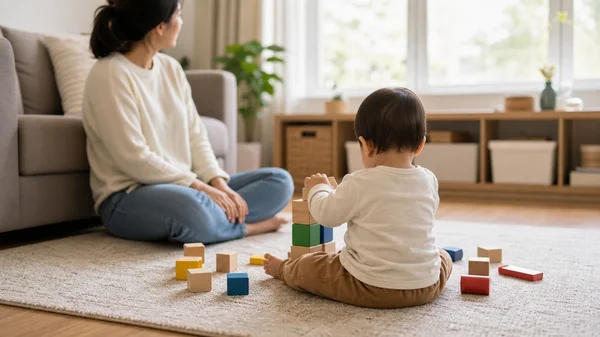
A 1-year-old is changing quickly. Some babies are early walkers but late talkers. Some are cautious around new people. Some are very focused on objects, sounds, or routines for short periods. That is why the most useful question is not, "Does my child do one item on a checklist?" The better question is, "Do several social, communication, play, or sensory differences appear together and keep showing up across settings?"
For example, a baby who does not wave once may simply be tired, shy, or uninterested. A broader pattern is more meaningful: rarely responding to their name, using few gestures, not sharing attention, showing limited imitation, and seeming more interested in objects than people during everyday play.
Also pay attention to lost skills. If a child used to babble, wave, reach, smile socially, or respond to a name and then stops doing it consistently, that deserves prompt discussion with a pediatric professional. Loss of skills can have different causes, but it should not be ignored.
Common Signs of Autism in a 1 Year Old
Early autism-related signs at 12-18 months often sit in four overlapping areas: social connection, communication, play, and repetitive or sensory patterns. A child does not need to show every sign. The concern is stronger when several signs are frequent, persistent, and noticeable to more than one caregiver.
Social connection: eye contact, shared smiles, and name response
Many parents first notice social differences during simple routines. A 1-year-old may make limited eye contact during feeding, diaper changes, songs, or peekaboo. They may smile, but not often in a shared social way, such as smiling back at a caregiver who is smiling at them. Some babies seem content when held but do not often look between a caregiver and an interesting object.
Response to name is another common observation. By this age, many babies turn, pause, or look up when a familiar person calls them. A possible concern is not one missed response in a noisy room. It is a pattern of rarely responding to their name even when hearing seems otherwise typical, such as reacting to music, doors, favorite snacks, or household sounds.
Gestures and communication: pointing, waving, reaching, and babbling
At around 1 year, communication is not only about words. Gestures matter. A baby may wave, reach to be picked up, lift arms, point, show an object, shake their head, or use sounds to get attention. Limited gestures can be one of the clearer early signs because gestures are a major bridge between baby communication and later language.
Babbling also matters, especially back-and-forth sound play. Some autistic babies do coo, babble, and smile, so the presence of those behaviors does not rule anything in or out. The more useful observation is whether the baby uses sounds socially: taking turns with a caregiver, changing sounds to get attention, or pairing sounds with eye contact and gestures.
If you are comparing signs of autism in 13 month old or 15 month old children, look for growth over time. A child may not have many words yet, but you would usually hope to see more intentional communication, not less.
Play and imitation: copying, showing, and shared attention
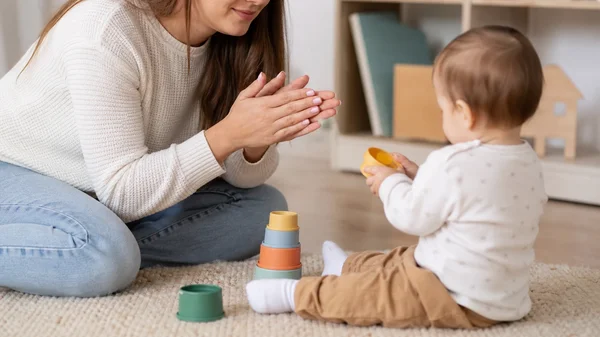
Shared attention means a child notices something and includes another person in the experience. A 1-year-old might point to a dog, hold up a toy, look back after a funny sound, or copy a clap during a song. Possible early concerns include rarely showing objects, rarely bringing items to a caregiver for shared enjoyment, or not copying simple actions like clapping, waving, banging a drum, or making a playful face.
Play can also look different. Some babies focus strongly on spinning wheels, opening and closing doors, lining up objects, or repeating one movement with little interest in a caregiver joining. Repetition alone is not automatically concerning; babies repeat because repetition helps learning. It becomes more useful to track when repetitive play crowds out social play, imitation, and flexible exploration.
Sensory or repetitive patterns
Some 1-year-olds show strong reactions to sound, texture, lights, clothing, bathing, toothbrushing, or certain foods. Others seem unusually under-responsive to things caregivers expect them to notice. Repetitive movements such as rocking, hand flapping, finger movements, or spinning can appear in many children, especially when excited or tired. What matters is frequency, intensity, and whether the pattern appears alongside social communication differences.
Sensory differences are not a stand-alone autism marker. They are one part of the overall picture. When sensory reactions, limited gestures, reduced shared attention, and repetitive play appear together, it is reasonable to write them down and ask for guidance.

What 12, 13, 15, and 18 Months Can Look Like
Parents often search by exact age because a few months can feel significant during the second year of life. The goal is not to grade a child month by month. It is to notice whether communication and social connection are becoming richer.
At 12 to 13 months
Around 12 months, many babies play simple social games, wave, use "mama" or "dada" for a parent, understand "no" in simple moments, pull to stand, and cruise while holding furniture. Possible autism-related observations include little response to name, few warm social smiles, limited eye contact, little babbling, few gestures, limited interest in peekaboo or pat-a-cake, and not reaching up to be picked up.
This is also the age when parents may wonder about signs of non verbal autism in 1 year old children. Be cautious with that wording. A 1-year-old with few words is not automatically nonverbal. The more useful question is whether the child communicates intentionally through sounds, gestures, eye gaze, facial expression, and shared attention.
Around 15 months
By 15 months, many toddlers are more active communicators even if their words are still emerging. They may show a toy, point to request help, bring something to a caregiver, or look back and forth between a person and an object. Concerns may include not sharing interests, not using gestures to request or show, not copying familiar actions, and not seeming to seek social attention during play.
This is a good time to use a simple observation log. Note what happened, where it happened, what you tried, and how your child responded. A pattern across meals, play, bath time, and outdoor walks is more useful than a single memory.
Around 18 months
At 18 months, autism-specific screening is commonly recommended during well-child care. That does not mean every concern must wait until 18 months. If signs are present earlier, or if skills are lost, parents can ask sooner.
Possible signs of autism in 18 month old toddlers may include not pointing to show something interesting, very limited words or gestures, little pretend play, limited response to name, strong distress with small routine changes, repetitive movements, or intense focus on parts of objects. Again, these observations are not proof. They are reasons to ask for developmental screening, early intervention guidance, hearing checks when relevant, or referral to a specialist.
Signs in a 1 Year Old Girl or Boy
Parents often ask whether signs of autism in a 1 year old girl differ from signs in a 1 year old boy. At this age, the core early observations are broadly similar: response to name, eye contact, gestures, shared attention, imitation, play flexibility, and sensory patterns.
The risk is not that boys and girls have completely separate checklists. The risk is that adults may interpret the same behavior differently. A quiet girl may be described as calm or independent. A quiet boy may be described as delayed or hard to engage. A socially hesitant child of any sex may be missed if caregivers rely only on stereotypes.
Use the same practical standard: compare your child with expected social communication growth for their age, not with gender expectations. If your concern is persistent, it is valid to raise it.
Walking, Toe Walking, and Movement Questions
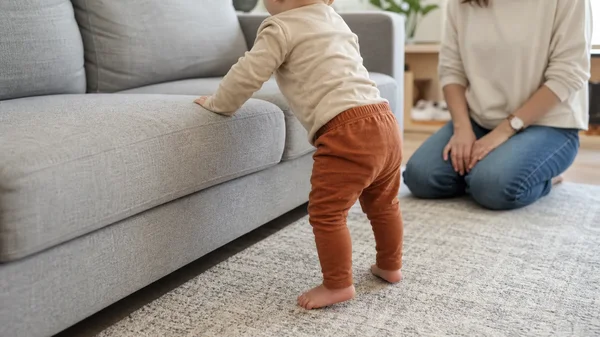
Searches about signs of autism in 1 year old walking usually come from parents who notice toe walking, delayed walking, unusual posture, or motor differences. Walking alone is not a core autism sign. Many 1-year-olds are still learning to stand, cruise, balance, and walk. Some healthy toddlers walk later than others.
Movement becomes more relevant when it appears with broader patterns. For example, a toddler may toe walk often, flap hands when excited, spin repeatedly, avoid imitation games, use few gestures, and rarely respond to name. That combination is more informative than walking style by itself.
If you notice motor delays, stiffness, loss of movement skills, frequent falls, unusual weakness, or feeding and swallowing concerns, discuss those directly with a pediatric professional. Those signs may need attention whether or not autism is part of the question.
Should You Use a Signs of Autism in 1 Year Old Quiz?
A signs of autism in 1 year old quiz can feel appealing because it promises structure when you are worried. The problem is that most online quizzes are too simple for a baby or young toddler. They can help you organize thoughts, but they should not be treated as an answer.
For a child this young, the safer approach is to use a checklist as a note-taking aid. Write down examples: "Did not turn when name was called three times during quiet play," "reached for snack but did not look at caregiver," or "smiled during tickling but rarely smiles back during face-to-face play." Specific notes help a clinician understand what you are seeing.
For parents who want broader language around traits, patterns, and screening limits, structured autistic trait reflection can be useful as educational background. It should not be used to label a baby or replace pediatric screening. The most important next step for a 1-year-old is still a conversation with a qualified child health professional.
What to Track Before You Speak With a Pediatric Professional
You do not need a perfect record. A short, concrete log for one or two weeks is often enough to make a conversation clearer.
Track these everyday moments:
- Name response in quiet and noisy settings
- Eye contact during feeding, play, songs, and comfort
- Social smiles and back-and-forth expressions
- Gestures such as waving, pointing, reaching, showing, or lifting arms
- Babbling, sound imitation, and turn-taking sounds
- Imitation of clapping, waving, facial expressions, or simple play
- Shared attention, such as looking between a person and an object
- Repetitive play, strong object focus, or distress with small changes
- Sensory reactions to sound, touch, food textures, lights, or movement
- Any loss of skills that were previously present
If possible, capture a few short videos of typical moments, not only the most concerning ones. A video of playtime, name response, snack requesting, and a favorite song can be more useful than a long explanation.
A Calm Next Step for Parents
If you are seeing possible early signs of autism in a 1 year old, the goal is not to panic or wait in silence. The goal is to act early and calmly. Bring your notes to your child's pediatric professional. Ask whether developmental screening, hearing evaluation, speech-language support, early intervention, or a specialist referral makes sense.
You can also keep learning about autism traits, screening limits, and supportive language through educational autistic test resources. Use that information to prepare better questions, not to make a final judgment about your child. Early support is most helpful when it is practical, respectful, and based on real observations.

FAQ
Can I tell if my 1 year old has autism?
You cannot tell from one sign or one online checklist. You can notice patterns that deserve follow-up, such as limited response to name, few gestures, little shared attention, reduced imitation, repetitive play, sensory differences, or loss of skills. Share those observations with a pediatric professional.
What is the biggest red flag for autism at 1 year old?
One of the most important signs is loss of previously used social or communication skills. Another strong concern is a cluster of persistent differences, such as rarely responding to name, using few gestures, making limited eye contact, and not sharing attention. A single behavior is less meaningful than a repeated pattern.
Do autistic babies coo and smile?
Some autistic babies do coo, babble, smile, and enjoy affection. The question is whether those behaviors are used socially and back-and-forth. For example, does the baby smile back, take turns with sounds, look to share enjoyment, or use sounds and gestures to connect with a caregiver?
Do autistic babies reach to be picked up?
Some do, and some may not do it often. Limited reaching, lifting arms, or seeking comfort can be worth noting when it appears with other social communication differences. It is not enough by itself to decide what is happening.
Are signs of autism in a 1 year old girl easier to miss?
They can be missed when adults rely on stereotypes or interpret quiet behavior as simply shy or easygoing. At 12-18 months, use the same observation areas for any child: name response, gestures, shared attention, imitation, play, sensory reactions, and skill changes.
Is late walking a sign of autism in a 1 year old?
Late walking by itself is not a clear autism sign. Motor delays can happen for many reasons. It becomes more relevant when movement differences appear with limited gestures, reduced social engagement, repetitive movements, sensory differences, or loss of skills. Bring motor concerns to a pediatric professional either way.
Should I wait until 18 months for screening?
Routine autism-specific screening is commonly done at 18 and 24 months, but concerns can be raised earlier. If your child loses skills, shows several persistent signs, or you feel something is not developing as expected, ask for guidance before the next routine visit.