Mildly Autistic Traits Meaning, Signs, and Next Steps
"Mildly autistic traits" is a phrase many people use when they notice autism-like patterns that seem subtle, masked, or hard to explain. It is not a formal label by itself, and it should not be used to rank someone's worth, intelligence, or future. Still, the phrase can point to real questions: Why do social rules feel effortful? Why are routines, focused interests, or sensory details so important? Why did these patterns become clearer in adulthood? If you are sorting through those questions, an educational autistic traits screener can be a structured starting point for reflection, while a qualified professional can provide a full evaluation when needed.

What Does Mildly Autistic Mean?
"Mildly autistic" usually means that a person relates to autism spectrum traits but may need less visible support than someone with more obvious daily barriers. In current autism language, clinicians often talk about autism spectrum disorder and support needs rather than "mild autism" as a separate condition. Some people may connect the idea with ASD Level 1, which means support is needed, especially around social communication, flexibility, sensory processing, or daily planning.
The word "mild" can be confusing. A trait may look mild from the outside because the person speaks fluently, works, studies, has relationships, or has learned to mask discomfort. From the inside, the effort can still be intense. Someone may hold it together at work, then feel exhausted at home. Another person may seem quiet in a group but spend hours replaying what they said. A child may do well academically yet struggle with transitions, noise, or unexpected changes.
It is more accurate to ask, "What traits are present, where do they create friction, and what kind of support helps?" That frame keeps the focus on practical understanding instead of labels.
Common Signs of Mild Autism in Adults
Signs of mild autism in adults often show up as lifelong patterns rather than sudden changes. They may include difficulty reading indirect social cues, uncertainty with small talk, literal interpretation of language, intense focus on specific interests, sensory sensitivity, strong preference for routine, and fatigue after social situations. Many adults also describe feeling "out of sync" without knowing why.
Some adults have learned to camouflage. They copy social scripts, rehearse facial expressions, force eye contact, or overprepare for ordinary conversations. This can make traits harder for others to notice. It can also make the adult doubt their own experience because they appear capable while privately using a great deal of energy.
Practical examples can include:
- Needing extra time to switch tasks, even when the new task is simple.
- Missing hints, sarcasm, or implied expectations unless they are stated directly.
- Feeling distressed by textures, lights, background noise, crowded rooms, or certain foods.
- Having deep interests that bring joy, expertise, and focus, but may be hard to interrupt.
- Preferring predictable plans and feeling unsettled when schedules change suddenly.
- Finding relationships meaningful but confusing when expectations are vague.
These patterns do not prove that someone is autistic. Some overlap with ADHD, anxiety, trauma, depression, social stress, sleep problems, sensory processing differences, or personality style. The useful question is whether the patterns are persistent, started early in life, and affect daily functioning across more than one setting.
Mild Autism, High-Functioning, and ASD Level 1
Searchers often connect mild autism with "high-functioning autism." That term is still used informally, but many autistic people dislike it because it can hide support needs. A person may be academically successful and still struggle with executive function, sensory overload, eating routines, burnout, or social misunderstanding. Another person may speak clearly but need substantial help with transitions or emotional regulation.
ASD Level 1 is a support-needs description, not a personality type. It suggests that the person may be able to communicate verbally and live with some independence, while still needing support for social communication, flexibility, planning, or daily stress. Support needs can also change. A person may cope well during a stable season and need more help during a job change, school transition, new relationship, grief, illness, or prolonged overload.

This is why trait language should stay flexible. Instead of asking whether someone is "mild enough" to count, it is better to ask what situations are easy, what situations drain energy, and what accommodations or communication changes make life more workable.
Mild Autism in Boys and Children
Mild autism in boys may be noticed through social differences, repetitive play, intense interests, sensory sensitivities, or difficulty with transitions. Some boys are identified earlier because their behavior disrupts class routines or family schedules. Others are missed because they have strong language skills, good grades, or interests that adults see as typical.
Parents may notice that a child talks at length about one topic, becomes upset when plans change, struggles with pretend play, plays beside peers instead of with them, or reacts strongly to sound, clothing, food texture, or crowded spaces. A child may also seem "fine" at school and then melt down at home after holding in stress all day.
The same caution applies: these signs are not a stand-alone answer. Development varies, and children can have overlapping learning, attention, anxiety, language, or sensory needs. If concerns persist, it is reasonable to gather examples from home, school, and caregivers, then speak with a pediatrician, school team, or autism-informed professional.

Mild Autism in Relationships
Mild autism in relationships can look like mixed signals. An autistic person may care deeply but show care through practical help, honesty, loyalty, problem solving, or shared interests rather than expected emotional scripts. A partner, friend, or family member may misread direct speech as coldness, quietness as disinterest, or a need for recovery time as rejection.
Clarity helps. Many relationship conflicts improve when expectations become explicit: how often to text, what counts as quality time, how to signal overload, how to handle changes in plans, and how to repair misunderstandings. It can also help to separate intent from impact. A blunt comment may not be meant to hurt, but the impact still matters and can be discussed.
For the autistic person, self-knowledge can reduce shame. For loved ones, learning about traits can reduce personalization. The goal is not to excuse every behavior or make one person do all the adapting. The goal is a fairer map of needs, strengths, communication styles, and boundaries.
Can Mild Autism Be Treated?
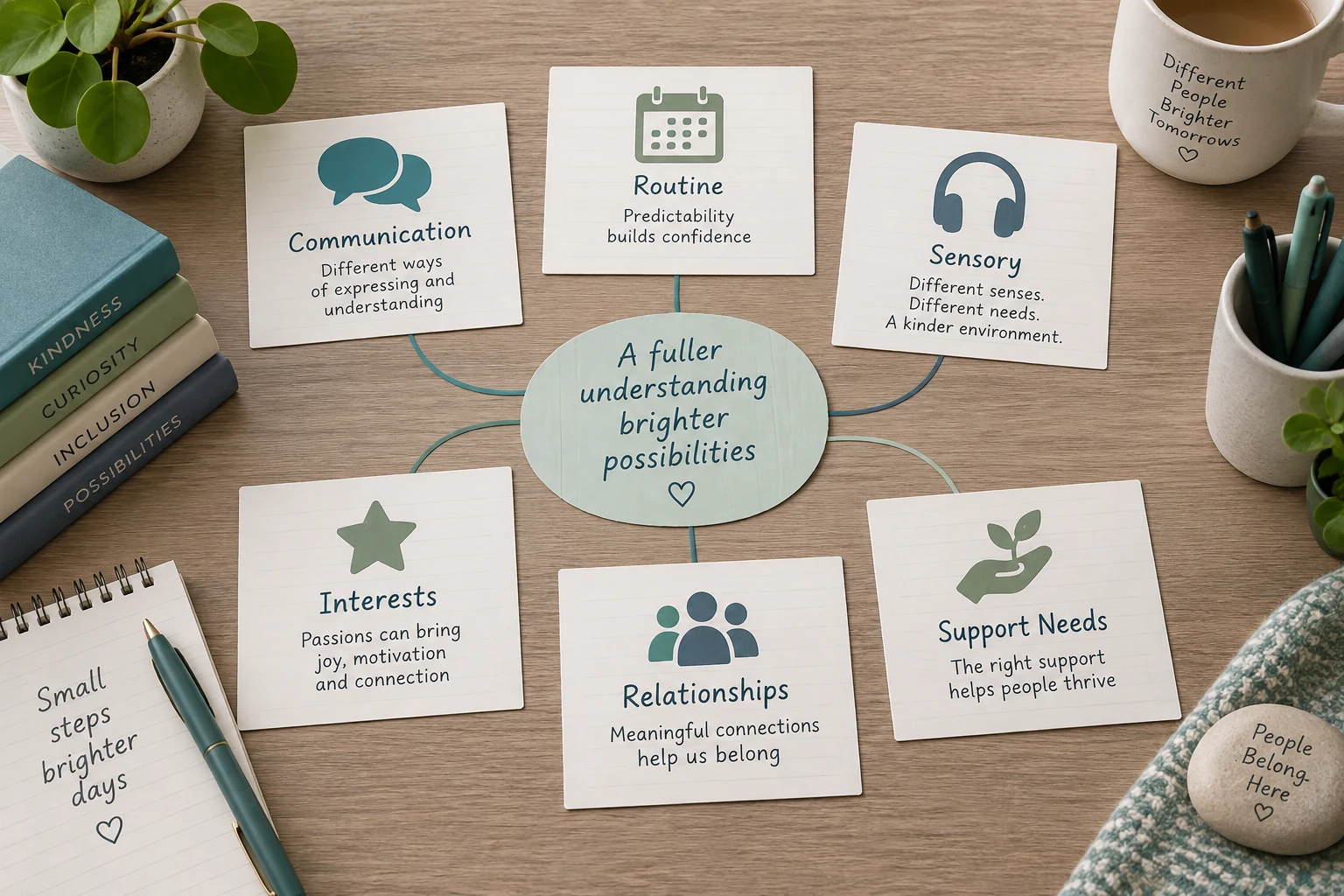
People often ask whether mild autism can be treated. Autism is usually described as a lifelong neurodevelopmental difference, so the safer question is what kinds of support can improve quality of life. Support may include social communication coaching, occupational therapy for sensory needs, school accommodations, workplace adjustments, therapy for anxiety or depression, relationship communication strategies, and routines that reduce overload.
Helpful support is not about erasing personality or forcing someone to act non-autistic. It is about reducing distress, building useful skills, protecting strengths, and making environments more workable. For one person, that may mean noise-reducing headphones and clearer meeting agendas. For another, it may mean practicing scripts for medical appointments, using visual schedules, or creating recovery time after intense social events.
If someone is in crisis, unable to function, being bullied, or facing major anxiety, depression, self-harm thoughts, or safety concerns, online reading is not enough. Professional support matters, and urgent local help may be needed.
A Practical Self-Reflection Checklist
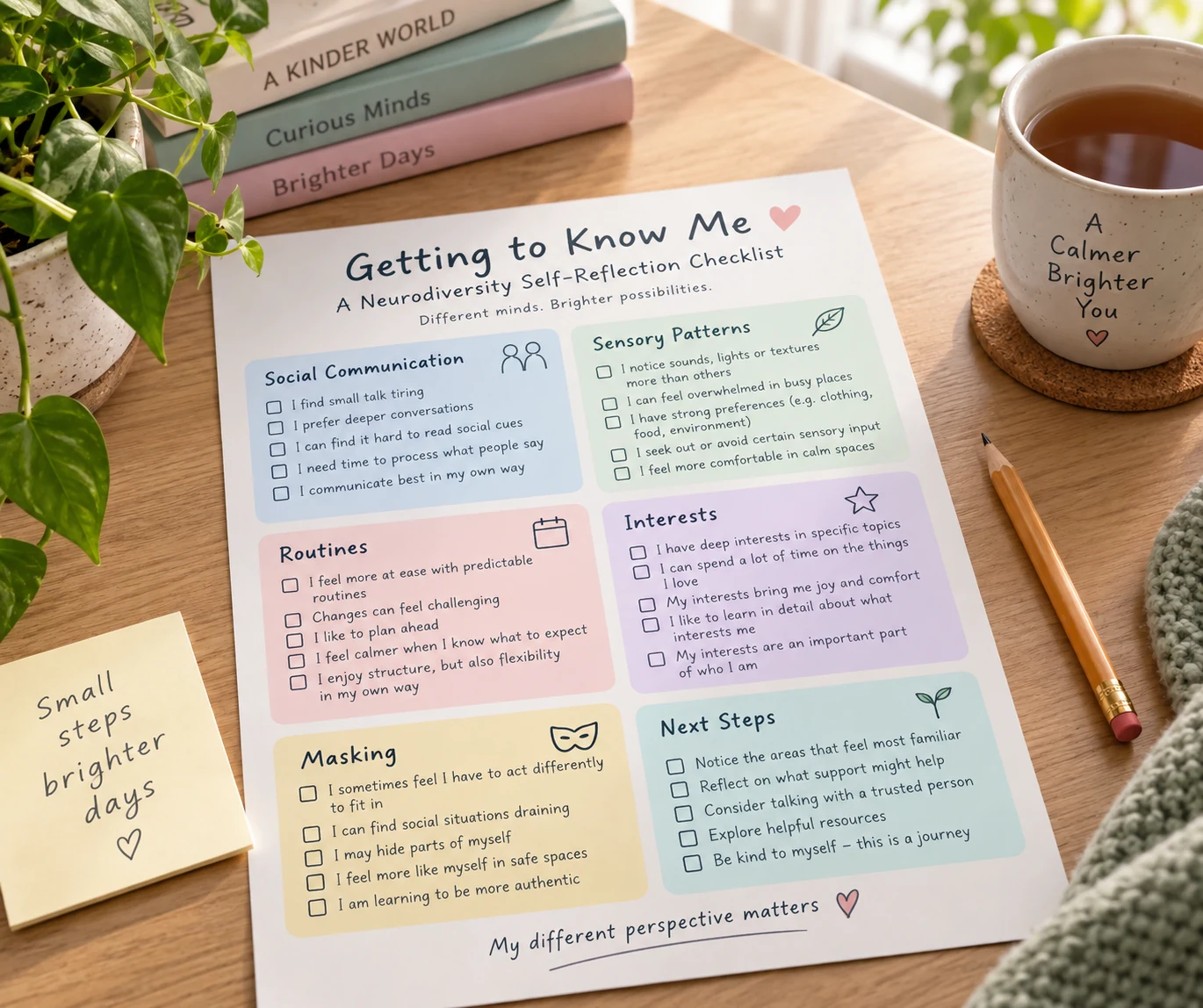
If you are wondering whether mildly autistic traits fit your experience, start with patterns rather than isolated moments. A single awkward conversation does not mean much. A consistent lifelong pattern across school, work, family, friendships, sensory experiences, and routines is more meaningful.
Consider these reflection prompts:
- Social communication: Do I often need people to be more direct than they expect to be?
- Energy: Do ordinary social situations require heavy preparation or recovery time?
- Sensory life: Do sounds, lights, textures, crowds, or food details affect my day more than others seem to expect?
- Flexibility: Do sudden changes feel disproportionately stressful?
- Interests: Do focused topics bring deep comfort, identity, skill, or intense time loss?
- History: Were similar patterns present in childhood, even if they were explained differently?
- Masking: Do I perform expected social behaviors while feeling disconnected or exhausted?
- Impact: Which traits create real problems, and which ones are strengths that need protection?
Writing examples beside each prompt can be more useful than counting traits. Dates, settings, triggers, coping strategies, and comments from people who know you well can help you see whether there is a stable pattern.
When to Consider a Mild Autism Test
A mild autism test or autistic traits screener can be useful when you want a structured way to organize observations. It can help you notice whether your questions cluster around social communication, attention switching, sensory patterns, detail focus, routine, or focused interests. It can also give you language for a conversation with a clinician, therapist, partner, family member, or school team.
Online screeners have limits. They depend on self-report, reading interpretation, mood, culture, masking, and how well the questions match real life. They can miss people who compensate well, and they can also feel relatable to people whose experiences come from another cause. Treat the result as a reflection aid, not a final answer.
If you want a structured starting point, a non-diagnostic AQ-based reflection tool may help you organize trait patterns before deciding whether to seek a formal evaluation or practical support conversation.
Mildly Autistic Traits and Your Next Step
The phrase "mildly autistic traits" can be useful if it opens a kinder, more accurate conversation. It becomes less useful when it minimizes effort, hides support needs, or turns a complex spectrum into a simple ranking. A person can appear independent and still need clearer communication, sensory adjustments, predictable routines, recovery time, or professional guidance.
Your next step does not have to be dramatic. You can write down examples, ask trusted people what they have noticed, compare current stress with childhood patterns, and explore structured autism trait reflection as one careful piece of the bigger picture. If the patterns affect work, school, relationships, mental health, or daily living, consider bringing your notes to a qualified professional who understands autism across ages and presentations.
FAQ
What does a mildly autistic person look like?
There is no single look. A mildly autistic person may speak fluently, work, study, date, parent, or socialize, while still having real differences in communication, sensory processing, routine needs, focused interests, or recovery time. Traits can be visible, subtle, or masked.
What is stimming in autism?
Stimming means repetitive movement, sound, or sensory behavior that helps with regulation, focus, expression, or comfort. Examples can include rocking, tapping, pacing, humming, hand movements, or touching textures. Stimming is not always harmful; context, safety, and personal comfort matter.
Can people with mild autism live a normal life?
Many autistic people live full, meaningful lives, but "normal" is not the best goal for everyone. A better goal is a workable life with appropriate support, healthy relationships, reduced overload, protected strengths, and room to communicate needs without shame.
What are signs of borderline autism?
"Borderline autism" is not usually used as a formal label. People may use it to describe traits that feel close to autism but unclear. The safer approach is to look at lifelong patterns, support needs, and overlap with other explanations, then seek professional input if the question affects daily life.
Is mild autism the same as Asperger syndrome?
Not exactly. Asperger syndrome is an older label that many people still recognize, but current language often uses autism spectrum disorder and support levels. Some people who once would have received an Asperger label may now be described as autistic with lower visible support needs.
Are mildly autistic traits different in adults and children?
The core areas can be similar, but they may appear differently. Adults may show masking, burnout, workplace strain, relationship confusion, or sensory fatigue. Children may show play differences, transition distress, intense interests, classroom challenges, or sensory reactions.
Should I take a mild autism test?
A screener can be useful if you want structure, but it should be treated as educational self-reflection. It cannot replace a full evaluation. If your traits affect daily life, bring examples and questions to a qualified professional.