Is Autism a Disease? What Autism Really Means
If you are asking "is autism a disease," the clearest answer is no: autism is not usually described as a disease. It is better understood as a neurodevelopmental condition, and in many medical, school, and legal settings it is also discussed as autism spectrum disorder or a developmental disability. That wording matters because it shapes whether people look for blame, fear, quick fixes, or practical support. For readers sorting through signs, causes, and next steps, a self-reflection starting point for autistic traits can be useful as education, but it should sit beside careful reading and professional guidance when concerns are significant.
The Short Answer: Autism Is Not a Disease
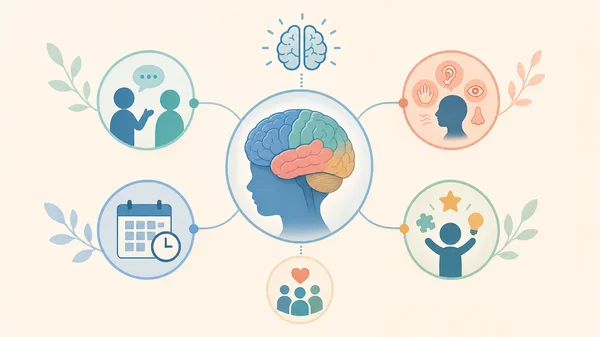
A disease usually suggests an illness process that attacks the body, spreads, worsens in a predictable medical way, or can be treated as a separate pathology. Autism does not fit that simple pattern. Autism is related to how the brain develops and how a person communicates, processes information, experiences social situations, handles routines, and responds to sensory input.
That does not mean autism is "nothing" or that support is unnecessary. Some autistic people need little daily support. Others need substantial help with communication, learning, regulation, self-care, safety, or co-occurring health needs. The word "spectrum" exists because autistic people vary widely in strengths, challenges, support needs, language, sensory experience, and daily life impact.
So the most useful wording is often this: autism is not a disease in the ordinary illness sense; it is a lifelong neurodevelopmental condition that may be described clinically as autism spectrum disorder and socially or legally as a disability when support or accommodations are needed.
Disease, Disorder, Condition, or Disability?
People use several labels for autism because each word comes from a different context. The disagreement is often less about facts and more about what the speaker is trying to emphasize.
| Term | What it usually emphasizes | How it applies to autism |
|---|---|---|
| Disease | Illness, pathology, infection, or a medical process | Usually not the best everyday description of autism |
| Disorder | A clinical category with defined criteria and support needs | Used in the medical term autism spectrum disorder |
| Condition | A broad, neutral way to describe a lifelong pattern | Often useful in education and everyday explanation |
| Disability | A support, access, or accommodation framework | Applies when autistic traits create barriers in daily life |
| Neurodivergence | Natural variation in brain development and processing | Used by many autistic people and advocates |
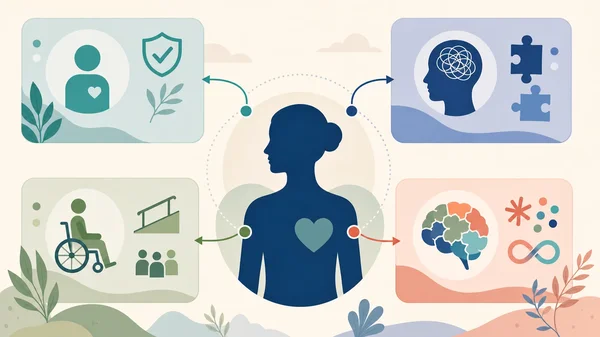
Calling autism a condition does not erase real challenges. Calling it a disability does not erase strengths. Calling it autism spectrum disorder does not mean every autistic person is sick. The safest approach is to match the word to the context and, when possible, respect the language an autistic person uses for themselves.
What Autism Is Instead
Autism affects patterns that are present from early development, even if they are not recognized until later. The most common areas include social communication, social understanding, restricted or repetitive patterns, focused interests, routines, sensory responses, and differences in learning or attention.
In real life, those patterns can look very different from person to person. One autistic adult may speak fluently but find unspoken social rules exhausting. Another person may need visual supports, communication assistance, or a highly predictable routine. A child may show intense interests, distress around change, delayed speech, unusual play patterns, or strong reactions to sound, texture, light, smell, or taste.
Autism is also not defined only by difficulties. Many autistic people describe deep focus, strong memory for detail, pattern recognition, honesty, loyalty, specialized knowledge, or creative problem-solving as meaningful strengths. A balanced view makes room for both sides: the person may have genuine needs and genuine capabilities at the same time.
Is Autism a Mental Disorder or a Disability?
The phrase "mental disorder" can be confusing. Autism is listed in clinical manuals as a neurodevelopmental disorder, not because autistic people are "mentally ill" in a casual or insulting sense, but because the term helps clinicians organize developmental patterns, support needs, and assessment criteria.
Mental health conditions can also occur alongside autism. Anxiety, depression, ADHD, sleep problems, eating challenges, or epilepsy may be more common among autistic people than among non-autistic people. Those co-occurring conditions deserve attention, but they are not the same thing as autism itself.
Autism can also be a disability. This is not a judgment about a person's worth. It means that the interaction between autistic traits and an environment can create barriers. A noisy classroom, vague instructions, unpredictable work expectations, inaccessible communication norms, or lack of sensory support can make daily life harder. Disability language can help people request accommodations, services, educational planning, workplace adjustments, or community support.
What Causes Autism?
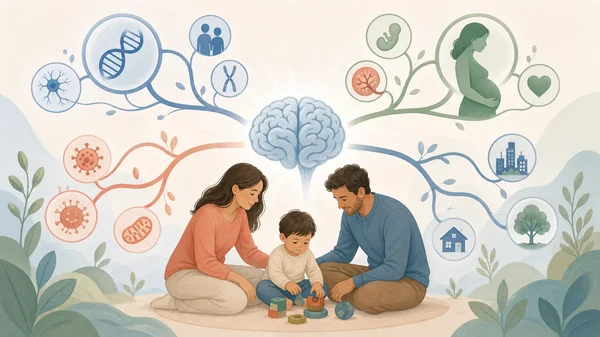
There is no single cause of autism. Current understanding points to many genetic, biological, and environmental factors that influence early brain development. Genetics plays a major role for many people, which is why autism can run in families, but genes do not work like a simple on-off switch.
Environmental risk factors are also studied, especially factors that affect pregnancy, birth, or early development. Examples discussed in medical research include some genetic conditions, older parental age, certain prenatal exposures, complications around birth, and very early birth. These are risk factors, not simple blame statements. Most parents cannot point to one event and say it "caused" autism.
Autism is not contagious. It is not a degenerative disease. It is not considered an autoimmune disease. It is not caused by parenting style, lack of affection, or ordinary childhood vaccines. It is also not accurate to present autism as a preventable disease. A better question is not "Who caused this?" but "What supports help this person communicate, learn, feel safe, and participate?"
What Are the Main Signs People Notice?
Searches often ask for "3 main symptoms" or "5 signs of autism." Simple lists can help people start learning, but they should not be treated as a personal verdict. Autism traits can be subtle, masked, culturally misunderstood, or mixed with ADHD, anxiety, language differences, trauma, giftedness, or sensory processing differences.
Three broad areas people often notice are:
- Social communication differences, such as difficulty reading indirect language, facial expressions, tone, or back-and-forth conversation.
- Restricted, repetitive, or focused patterns, such as strong routines, repeated movements, intense interests, or distress when plans change.
- Sensory, attention, and regulation differences, such as strong reactions to sounds, textures, lights, smells, transitions, or crowded spaces.
Five everyday signs might include limited eye contact or unusual eye contact, delayed or different speech patterns, intense special interests, repeated movements or phrases, and strong preference for routine. In adults, signs may show up as social exhaustion, scripted conversation, masking, sensory overload, difficulty with unexpected changes, or a long history of feeling different without knowing why.
The key is pattern and impact. One trait alone does not explain a person. A careful assessment looks at development, daily functioning, communication, sensory experience, history, strengths, support needs, and context.
How Screening Fits Into a Careful Understanding
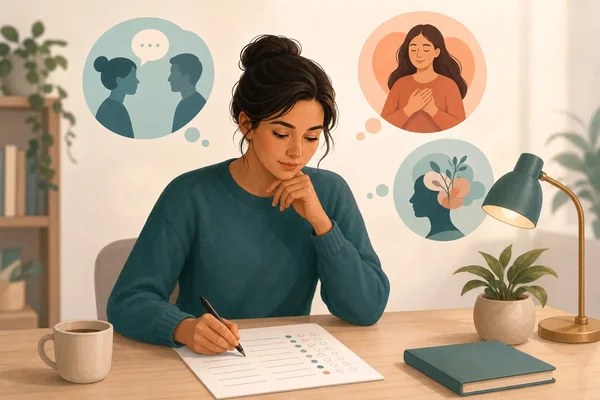
Online autism screening tools can help people organize their observations, especially when they feel unsure where to begin. A questionnaire may highlight trait patterns, give language for reflection, or make it easier to talk with a clinician, school team, therapist, or trusted support person.
At the same time, screening is not the same as a formal evaluation. Results can be affected by masking, stress, literal interpretation of questions, co-occurring ADHD or anxiety, cultural expectations, age, and whether the person answering has enough self-awareness or outside observations. This is why an AQ-based screening overview is best used as a starting point, not as a final answer.
If you use a screener, write down the real-life examples behind your answers. Instead of only noting "I struggle socially," record what happens: group conversations move too fast, sarcasm is hard to read, eye contact feels painful, or recovery after social events takes hours. These details are more useful than a score alone.
For parents, screening can help organize concerns before speaking with a pediatrician, school psychologist, or developmental specialist. For adults, it can support a more focused conversation about lifelong patterns, sensory needs, work stress, relationships, and whether a formal autism assessment would be helpful.
A Balanced Way to Think About Autism
The question "is autism a disease or not" often comes from a sincere wish to use the right language. A respectful answer should avoid two extremes. One extreme treats autism only as pathology and overlooks identity, strengths, and access needs. The other extreme treats autism only as difference and ignores people who need substantial support. Real autistic lives are more varied than either slogan.
A practical middle ground is to describe autism as a neurodevelopmental condition that can involve disability, support needs, and meaningful strengths. That wording leaves room for medical assessment, educational accommodations, family support, self-understanding, and autistic self-advocacy.
If this topic feels personal, consider gathering examples from daily life: communication patterns, sensory triggers, routines, social recovery time, focused interests, childhood history, school or work barriers, and strengths. You can also use a gentle next-step resource for autistic traits to reflect before deciding whether to seek formal professional evaluation.
FAQ
Is autism a disease or not?
Autism is not usually described as a disease. It is more accurately described as a neurodevelopmental condition. In clinical settings, people may use the term autism spectrum disorder. In school, work, or legal settings, autism may also be treated as a disability when support or accommodations are needed.
Is autism a genetic disease?
Autism has a strong genetic component for many people, but calling it a single genetic disease is too simple. Many genes may contribute, and genetic factors can interact with biological and environmental influences during early development. Some autistic people also have specific genetic conditions, while others do not have one clear genetic explanation.
Is autism a mental disorder?
Autism is classified clinically as a neurodevelopmental disorder. That does not mean autism is the same as a mental health condition like depression or anxiety. Mental health conditions can occur alongside autism, and they deserve care, but autism itself is about developmental and neurological patterns.
What is 90% of autism caused by?
There is no trustworthy one-factor answer that explains 90% of autism. Genetics is a major contributor, and family patterns are important, but autism does not come from one simple cause. It is better to think in terms of multiple influences on early brain development rather than a single percentage or a single event.
What are the three main causes of autism?
It is safer to speak about broad contributing areas rather than three direct causes. The main areas discussed in current research are genetic factors, biological factors affecting early brain development, and some environmental or pregnancy-related risk factors. None of these should be used to blame parents or reduce autism to one preventable event.
What are 5 signs of autism?
Five possible signs are social communication differences, intense or narrow interests, repeated movements or speech patterns, strong need for routine, and sensory sensitivity. These signs vary by age and person. Some people mask traits for years, while others have clear support needs early in childhood.
What billionaire has Asperger's?
The public figure most often mentioned is Elon Musk, who has publicly referred to Asperger's. That question should be handled carefully, though. Asperger's is now generally folded into autism spectrum disorder in many clinical systems, and a famous person's story cannot tell you whether you or someone else is autistic.