Autism Identity Explained: Why Neurodiversity Isn’t a Disorder
Have you ever felt fundamentally different, like you're navigating a world with a rulebook you never received? This feeling of being out of sync is common, but it's not a flaw. For many, the concept of neurodiversity offers a powerful new way to understand these experiences. It shifts the story from 'disorder' to 'difference.'
Let’s unpack neurodiversity together—a concept helping millions embrace their unique minds. We will look at why embracing autism as part of your identity can be a profound step toward self-acceptance and a richer, more authentic life. If you're starting this journey of self-discovery, a simple, confidential screening can be a helpful first step. You can start your journey with our free tool designed for self-exploration.
Understanding Autism Traits Through Neurodiversity
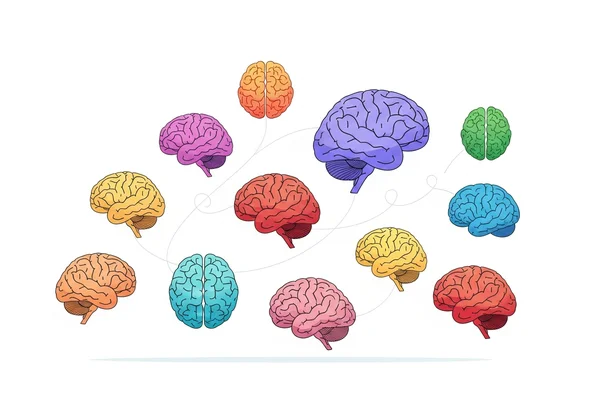
The term "neurodiversity" might sound complex, but its core idea is simple and beautiful. It suggests that differences in brain function and behavioral traits are a natural part of human variation. Just as we have biodiversity in nature, we have neurodiversity among people. It’s a biological fact, not a perspective or an ideology.
This concept moves us away from thinking there's only one "right" or "normal" way for a brain to work. Instead, it recognizes that conditions like autism, ADHD, and dyslexia are simply different ways of thinking, learning, and perceiving the world. Understanding this foundation is key to seeing autism in a new light.
Beyond the Medical Model: Reframing Autism
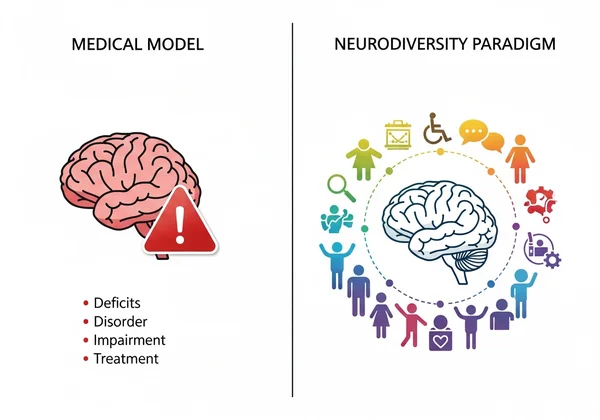
For a long time, autism has been viewed through a "medical model." This model defines it as a disorder with a list of deficits that need to be corrected or managed. It focuses on what an autistic person can't do compared to a "typical" person. While this model can be useful for accessing support, it often creates a negative and incomplete picture.
The neurodiversity paradigm reveals a key insight: many autistic challenges arise because society caters to neurotypical brains. The issue isn't the person; it's the lack of accommodation and understanding in their environment. This reframing shifts the goal from "fixing" a person to creating a more inclusive and accepting society.
Neurotypical vs. Neurodivergent: Understanding the Spectrum
To understand neurodiversity, it helps to know two key terms: neurotypical and neurodivergent.
- Neurotypical (NT) refers to individuals whose brain functions, processing, and behaviors fall within the range society considers "standard" or "typical."
- Neurodivergent (ND) is an umbrella term for people whose brains function differently. This includes autism, as well as ADHD, dyslexia, Tourette's syndrome, and other conditions.
It's important to remember that these are not value judgments. One is not better than the other. They are simply different ways of being. This understanding helps dismantle the idea that neurodivergent individuals are "less than" and instead celebrates the diverse ways human minds can experience the world.
Autism as an Identity: Traits, Not Deficits
When we view autism through the lens of neurodiversity, it transforms from a clinical diagnosis into a core part of a person's identity. This perspective allows us to move past the debate of autism identity vs disorder and see it as a valid way of being. For many, receiving this label is not a sad event but a moment of profound clarity—an explanation for a lifetime of feeling different.
Viewing autism as an identity means acknowledging the entire experience, including both the challenges and the unique strengths that come with it. It's about seeing autistic traits not as flaws to be hidden, but as integral parts of who a person is.
The Strengths and Unique Perspectives of Autistic Individuals
Focusing only on challenges provides a one-sided view of autism. Many autistic people possess remarkable strengths that stem directly from their neurotype. Embracing these can be a powerful part of self-acceptance.
Common autistic strengths include:
-
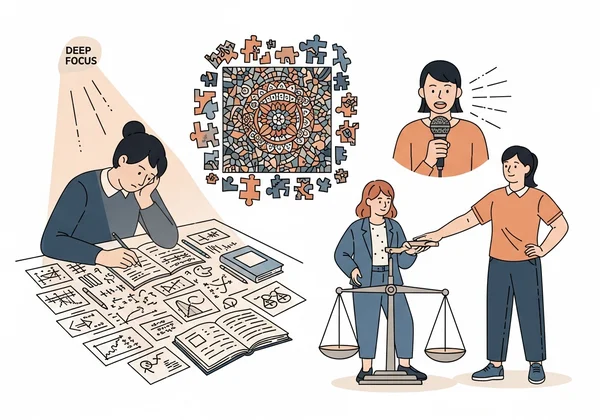
Deep Focus: The ability to concentrate intensely on a subject of interest (often called hyperfocus), leading to high levels of expertise. You can discover your focus patterns to better understand this unique trait.
-
Pattern Recognition: A strong aptitude for seeing patterns, details, and connections that others might miss.
-
Honesty and Directness: A communication style that is often straightforward, sincere, and free of hidden agendas.
-
Strong Sense of Justice: A deeply ingrained sense of fairness and a passion for advocating for what is right.
-
Unique Problem-Solving: The ability to approach problems from unconventional angles, leading to creative and innovative solutions.
Unmasking & Embracing Your Autistic Self
Many autistic individuals, especially those diagnosed later in life, spend years "masking." Masking (or camouflaging) is when autistic people hide their traits—consciously or not—to meet neurotypical expectations. This exhausting act often involves suppressing natural behaviors like stimming.
While masking can be a survival strategy, it is mentally and emotionally exhausting. It can lead to burnout, anxiety, and a feeling of not knowing who you truly are. The journey of "unmasking" is about slowly and safely letting go of these pretenses. It's about allowing yourself to be authentically autistic. This process is a vital part of building a strong, positive autistic identity. If you're wondering about your own traits, our tool can help you explore your traits in a private, pressure-free way.
Cultivating Autistic Self-Acceptance and Identity
Understanding neurodiversity and reframing autism is the first step. The next, and often longer, part of the journey is cultivating self-acceptance. Self-acceptance means rejecting harmful stigma. Start valuing yourself as you truly are—neurodivergent and valid.
This journey is unique for everyone. It involves kindness, patience, and connecting with resources and people who support and validate your experience.
Finding Your Community and Belonging
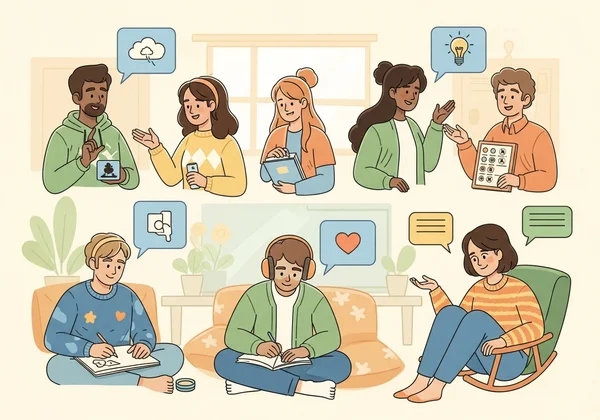
One of the most powerful tools for self-acceptance is finding your community. Connecting with other autistic and neurodivergent people can be life-changing. For the first time, you may feel truly understood without having to explain yourself. Community provides validation, shared experiences, and a sense of belonging that may have been missing.
These connections flourish in many forms. Online spaces like forums, dedicated social media groups using hashtags like #ActuallyAutistic, or Discord servers provide immediate access to peers worldwide. These platforms offer a space to share advice, celebrate neurodivergent joy, and find solidarity. Exploring these neurodivergent community resources can be a great first step toward finding your people and feeling less alone on your journey.
You can also find community in:
- Local support or social groups for autistic adults.
- Special interest groups centered around hobbies where you might find like-minded peers.
Practical Steps for Self-Advocacy and Well-being
Self-acceptance also involves taking practical steps to make your life work better for you. This is called self-advocacy. It means identifying your needs and learning to communicate them effectively.
Here are some practical steps you can take:
- Identify Your Sensory Needs: Pay attention to what sensory inputs (lights, sounds, textures) overwhelm you or comfort you. Use this knowledge to create a more comfortable environment with tools like noise-canceling headphones or sunglasses.
- Set Clear Boundaries: Learn to say "no" to social events or tasks that you know will lead to burnout. It is essential to protect your energy.
- Embrace Stimming: Allow yourself to stim freely when you need to. Rocking, fidgeting, or other repetitive movements are natural and healthy ways to self-regulate.
- Communicate Your Needs: Let friends, family, or colleagues know what you need to thrive. This could be clearer instructions, written communication, or more time to process information.
Embracing Your Neurodivergent Identity Journey
The shift from seeing autism as a disorder to embracing it as an identity is a deeply personal and empowering journey. It's about recognizing that your brain is not broken; it's simply different. This path involves understanding the concept of neurodiversity, appreciating your unique strengths, and learning to advocate for your needs.
This journey of discovery is valid, whether you have a formal diagnosis or are just beginning to explore your traits. Each step you take toward understanding and accepting your authentic self is a step toward a more fulfilling life.
Curious how your brain works? Our anonymous screener helps you map your traits in under 15 minutes. It’s a way to organize your thoughts and see if your experiences align with common autistic traits. You can begin your test today to support your path of self-discovery.
Autism Identity FAQs: From Self-Assessment to Acceptance
How can I explore if I might be autistic?
Exploring whether you might be autistic often begins with self-reflection and research. Many people start by reading articles, watching videos from autistic creators, and comparing their own life experiences. A helpful next step can be using a confidential online screening tool, which can provide structure to your exploration. Our autistic test is based on established questionnaires and can help you identify traits that may warrant further discussion with a professional.
Can autism manifest differently in individuals?
Absolutely. Autism is a spectrum, meaning it presents in a vast number of ways. There is a saying in the community: "If you've met one autistic person, you've met one autistic person." Traits can vary widely based on age, gender, personality, life experiences, and any co-occurring conditions. For example, autism in women and girls is often missed because it can present differently and may involve more social camouflaging, or "masking."
What's the difference between social awkwardness and autistic traits?
While there can be overlap, the key difference often lies in the underlying cause and consistency. General social awkwardness is a common experience that can be situational. For autistic individuals, social differences are often more pervasive and stem from a different way of processing social information. This can include finding non-verbal cues (like body language or tone of voice) confusing, preferring direct communication, and experiencing social burnout from navigating neurotypical rules.
Understanding how different neurotypes present can also be helpful. Compare autism vs. ADHD traits to see the distinctions.
Is it okay to self-identify as autistic without a formal diagnosis?
Self-identification is a valid and important part of many people's journey. Within the autistic community, it is widely accepted due to the significant barriers that exist to getting a formal diagnosis. These barriers can include high costs, long waiting lists, and a lack of trained professionals who can accurately diagnose adults, especially women. While self-identification can bring immense personal clarity and community connection, a formal diagnosis is typically required to access legal protections and workplace or educational accommodations.
Disclaimer: This tool is a screening instrument designed for self-exploration and informational purposes only. It is not a diagnostic tool. The results cannot and should not be used to make a formal diagnosis of Autism Spectrum Disorder (ASD). A proper diagnosis can only be provided by a qualified healthcare professional, such as a psychiatrist, psychologist, or neurologist, through a comprehensive clinical evaluation. Please consult with a professional for an accurate assessment.